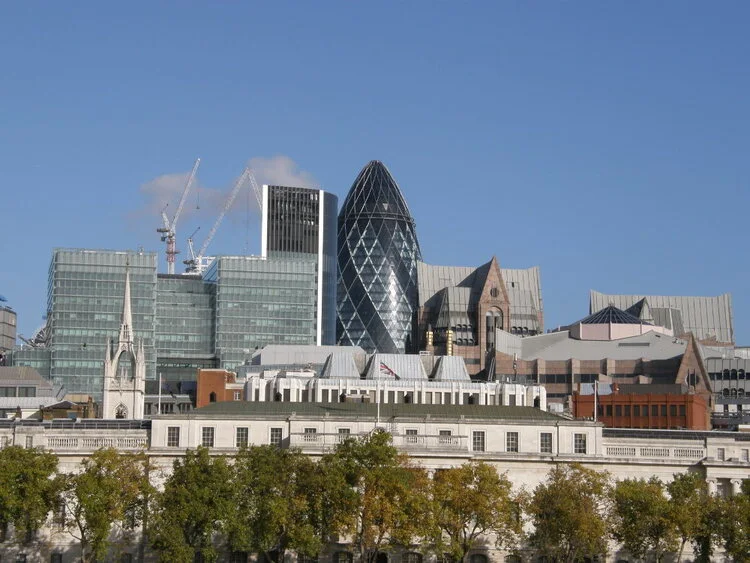
London is one of the top financial centres in the world. It successfully competes with New York and Tokyo, and is an unrivalled leader in the European financial market.
According to some analysts, London’s prominent position in the global financial market can be attributed to the unique character of London’s market but according to others, the UK capital is what it is today due to government regulations which made it possible for the City to outperform its competitors in mainland Europe.
There is also a third view, according to which London’s success in the global financial market is due to a combination of several factors including its long history as the financial centre, open market economy, political stability, highly skilled and educated labour force (consisting of everything from RICS surveyors to builders and architects), and the fact that every major international financial institution has an office or headquarters in the city.
Aviva
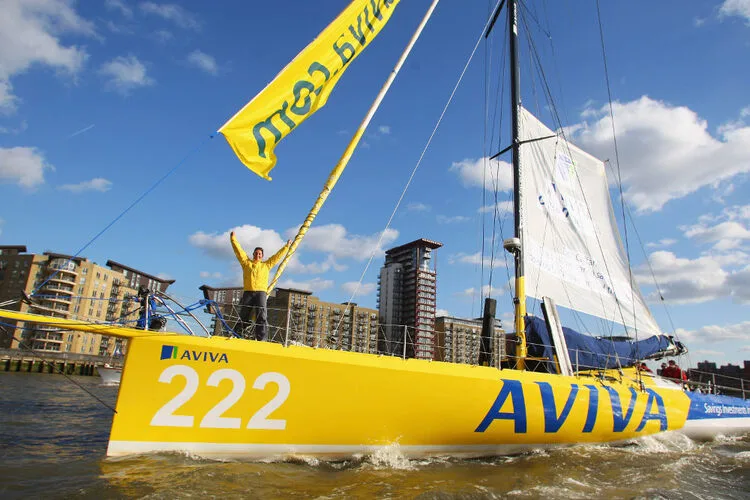
With more than 30 million customers in more than a dozen countries around the globe, Aviva is one of the largest insurance companies in the world. The London-headquartered company is also the No.1 choice for general insurance as well as life and pensions in Britain. It was founded in 2000 by a merger of two insurance companies but it traces its history back to the late 17th century.
The 17th Century Origins
As mentioned above, Aviva traces its origins to the late 17th century. More precisely, it traces its roots to 1696, the year of the creation of the Hand in Hand Fire & Life Insurance Society. Like many other financial organisations/companies at the time, the Hand and Hand was founded at a coffee house and was at certain point the world’s oldest fire insurance provider of its kind. It is connected to Aviva through the Commercial Union which acquired the fire insurance company in the early 20th century.
CGU plc
CGU plc played a central role in the creation of Aviva. This London-headquartered insurance group was established in 1998 through the merger of the Commercial Union and General Accident, both of which were founded in the 19th century. The Commercial Union was created in 1861 by a group of merchants as a fire insurance company. Over the years, it grew into one of the largest insurance companies in Britain through both acquisitions and expansion of its products and services. General Accident was founded in the mid-1880s by a group of business owners and landlords/landowners with an aim to insure their property/assets and safeguard their employees’ interests.
CGNU
In 2000, the newly created CGU plc merged with Norwich Union, another British insurance company with an impressive history and tradition in the insurance sector. The company was founded in 1797 by a young banker named Thomas Bignold (1761-1835) as the Norwich Union Fire Insurance Society. By the end of the 19th century, it grew into one of the largest multinational insurance companies. Interestingly, The Norwich Union worked hard on the acquisition of General Accident in the early 20th century but failed to take over the company. However, 100 years later the two insurance companies merged to form the CGNU which in turn was renamed as Aviva plc in 2002. The group continued to use the Norwich Union brand in the UK until 2009 when it too was replaced by the Aviva brand.
Bank of England
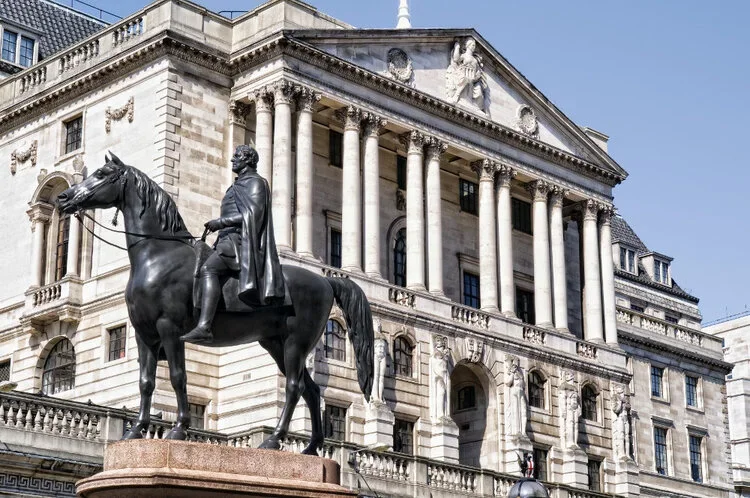
The Bank of England is the central bank of the UK. With a history dating back to the end of the 17th century, the Bank is the 8th oldest bank and the second oldest central bank in the globe. As such, it served as a prototype for many central banks in the mainland Europe and elsewhere. Originally privately owned, the Bank was later nationalised.
Foundation and Early History
The Bank of England was founded in 1694 with an aim to help the government get the necessary funds for its involvement in the Nine Years’ War (1688-97) against France under King Louis XIV. Its foundation was conceived by Charles Montagu, 1st Earl of Halifax (1661-1715) who was at the time serving as the Commissioner of the Treasury. The idea for the establishment of the Bank, however, was from Sir William Paterson (1658-1719) who called for its creation in the early 1690s. Therefore, Paterson is often referred to as the father of the Bank of England.
Paterson is also remembered as the proponent of the Darien scheme. The latter sought to create a Scottish colony on the Gulf of Darien in today’s Panama which went horribly wrong. Paterson who joined the expedition to Panama lost his wife and child, and got severely ill himself. However, he managed to survive and later played an important role in the formation of the Union of Scotland and England.
The Bank’s Building and Headquarters
The Bank was originally located in Walbrook on the exact same site where remains of a Roman temple (to god Mithras) were found during archaeological excavations in the 1950s. It moved to a newly built purpose building in Threadneedle Street in 1734 and it has been headquartered here ever since. The Bank building went through several alterations, extensions and improvements according to plans by several architects including prominent names such as Sir Robert Taylor (1714-1788), Sir John Soane (1753-1837) and Sir Arthur Blomfield (1829-1899), to mention only a few. One of the most recent and most controversial projects involving the Bank’s building took place in the 1920s and 1930s when Sir Herbert Baker (1862-1946) demolished much of the old office buildings to create a new modern space.
From Nationalisation to the Present Day
As mentioned above, the Bank of England has been nationalised in 1946. In 1997, however, the Bank was granted operational independence by the UK Parliament. A few years later, it also received a new set of responsibilities including the obligation to oversee and regulate banks, insurance companies, stop repossession companies, investment firms, credit unions,… ensure financial stability, set the UK monetary policy, etc.
Barclays
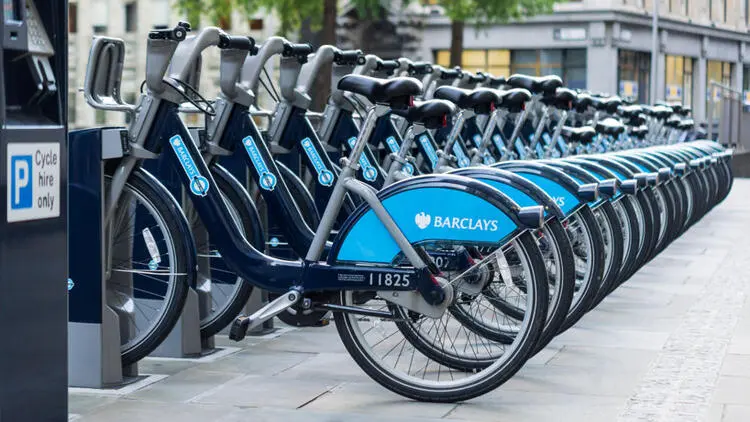
Barclays is one of the world’s largest financial institutions offering a wide range of banking products and services including wealth management, credit cards and mortgage lending. Headquartered in London since its foundation in the late 17th century, the company offers its products and services not only in the UK but around the world. It is present in more than 50 states and territories, and has nearly 50 million clients including individuals, small to medium businesses and large multinational corporations. Since 2005, it has been headquartered in One Churchill Place in the district of Canary Wharf in London.
Foundation and Early History
The company origins date back to the late 17th century, more precisely to year 1690 when a quaker goldsmith named John Freame (1669-1745) and his fellow quaker Thomas Gould started a goldsmith banking business. In the late 1720s, they moved to a building in Lombard Street featuring a sign of a Black Spread Eagle which became an important part of the bank’s identity and recognition. In 1736, Freame and Gould were joined by the former’s son-in-law James Barclay after whom the bank would eventually be named.
Until the late 19th century when several banks from London and elsewhere joined under the name of Barclays and Co., the bank went by the name of ‘Barclay, Bevan and Bening’ and ‘Barclay, Bevan, Bening and Tritton’ indicating the names of its owners/partners.
From a National Bank to One of the Leading International Financial Institutions
At the beginning of the 20th century, Barclays started to expand its network through mergers and acquisitions - initially of smaller banks - and affirming itself as a national bank. It continued to grow and expand over the following years and in the mid-1925, it entered the international financial market by amalgamation of a bank in South Africa and shortly thereafter, in Egypt. In the mid-1960s, Barclays opened its first affiliate in the United States - the Barclays Bank of California (San Francisco).
In addition to entering new markets around the world, Barclays also worked hard on offering more and better services/products to its clients. In 1967, it installed the world’s first ATM in the town of Enfield in London. One year earlier, it became the first to offer credit cards in the UK. In 1987, it launched the Connect card which became the first debit card in the UK and was one of the first banks in the world to introduce mobile phone payment applications/programmes.
HSBC
Commonly referred to simply as HSBC, the HSBC Holdings plc is the largest bank in the UK and the second largest bank in the world. Headquartered in the 45 storey tall tower at 8 Canada Square in London’s Canary Wharf, the bank has over 6,500 offices in more than 80 countries around the world including Europe, Americas, Asia and Africa, which are serving approximately 60 million clients ranging from private individuals to large multinational corporations.
Asian Origins
HSBC is today a British multinational bank but it wasn’t founded in Britain. It was founded in Hong Kong in 1865 when the city was a British territory and when the trade between China and Europe entered a period of an unprecedented growth. Thomas Sutherland (1834-1922), the co-founder of the Hong Kong and Whampoa Dock recognised the need for a bank to finance China-Europe trade and established the Hong Kong and Shanghai Banking Company that was headquartered in Hong Kong. Within a month, a branch was launched in Shanghai and one year later, the bank opened a branch in Japan.
Expansion in the Early 20th Century and the Second World War
The bank grew rapidly in the early 20th century, opening new branch offices in the Philippines and Thailand as well as gaining new clients in the existing locations. The headquarter building - the HSBC Main Building - in Hong Kong thus quickly became too small. In 1933, the existing 19th century building was demolished and replaced by a new building which, however, was torn down as well in the 1970s to erect the current building, now home to The Hong Kong and Shanghai Banking Corporation (a subsidiary of HSBC).
Before the Japanese invasion of Hong Kong in 1941, the Bank relocated its headquarters to London. It moved back after the end of the Second World War and entered a period of a massive international expansion which eventually made it one of the top 10 and later, one of the top 5 largest banks in the world.
Foundation of the Modern HSBC
Today’s HSBC was formally established only in 1991 as the parent company of the Hong Kong and Shanghai Banking Corporation before the latter acquired the UK-headquartered Midland Bank and before Britain transfered sovereignty of Hong Kong to China. In 1993, the newly created HSBC moved its headquarters from Hong Kong to London which was also one of the conditions for takeover of the Midland Bank.
Lloyds Banking Group
Lloyds Banking Group is one of the most prominent London-headquartered financial institutions. Created by the takeover of HBOS by Lloyds TSB in the late 2000s, the Group is one of the so-called Big Four (banks) in Britain but it is also present in the international financial and banking markets, offering its products and services in other European countries, the United States, Asia and the Middle East. In addition to retail banking, Lloyds products and services also include mortgages, commercial & private banking, general insurance, pensions, investment banking and more. The HBOS brand ceased to be used after the acquisition. In contrast, the Group still uses the brands Lloyds Bank, Halifax, TSB and the Bank of Scotland.
Foundation and Early History
History of today’s Lloyds Banking Group dates back to 1765 when Birmingham manufacturer John Taylor (1704-1775) and iron dealer Sampson Lloyd (1699-1779) launched a private bank in Dale End in Birmingham. Taylor’s and Lloyd’s bank grew slowly - the first branch office opened only in 1864, nearly 100 years after the bank’s creation. However, the bank expanded significantly by the end of the 19th century, taking over a number of smaller banks. The trend continued in the 20th century and Lloyds became one of the largest banks in the UK and a part of the ‘elite’ group known as the Big Four.
Creation of Lloyds TSB Group plc
In 1995, Lloyds TSB Group plc was created as a result of the merger of Lloyds Bank and Trustee Savings Bank, commonly known as the TSB. The latter was founded in 1810 in the Scottish village of Ruthwell by Reverend Henry Duncan (1774-1846) with an aim to help the poor villagers save some money for hard times. A number of trustee savings banks emerged throughout Britain in the 19th and 20th century which, however, merged in the 1970s and 1980s, eventually forming the TSB Group plc which in turn has merged with Lloyds in the mid-1990s.
Acquisition of HBOS
In 2009, Lloyds TSB took over HBOS, a major banking and insurance company which was formed in 2001 by the amalgamation of the Bank of Scotland and Halifax plc. Lloyds TSB which was renamed as Lloyds Banking Group thus also acquired the Bank of Scotland and Halifax brands, HBOS affiliates overseas, and HBOS insurance and investment brands. When created, HBOS was envisioned to extend the Big Four to Big Five.
Lloyd’s of London
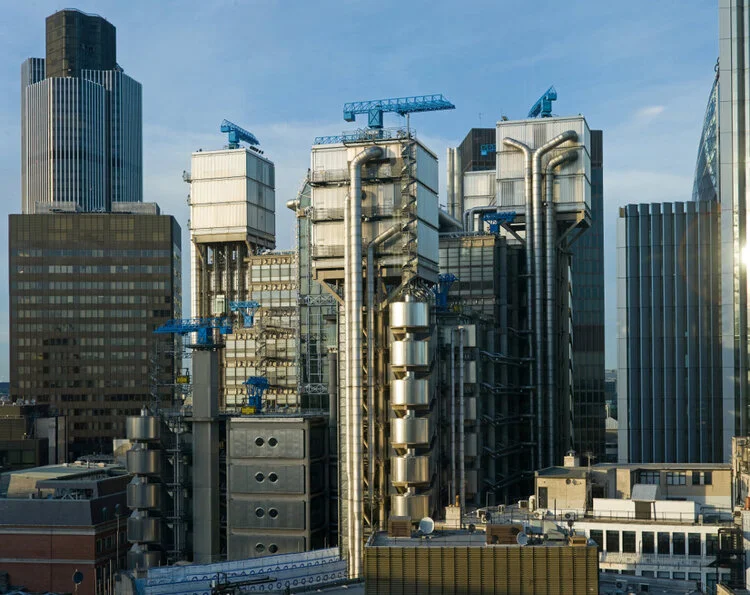
Lloyd’s of London is the oldest insurance market in the world. Formed over 300 years ago, Lloyd’s works as a regulator; it oversees and forms the rules for the members or underwriters to come together and do business. It was initially non-incorporated and granted membership only to British subjects. Today, membership is open to both British and non-British subjects and both private individuals and large multinational corporations.
Foundation and Early History
The world’s oldest insurance market traces its origins to 1688 when Edward Lloyd (1648-1713) opened a coffee shop called Lloyd’s Coffee House. Located on Tower Street, London, the coffee shop instantly became popular with shipowners and sailors. To keep his customers happy and attract new ones, Lloyd provided them with important shipping news. But he also noticed that they used his coffee house to talk about insurance. Soon, Lloyd’s Coffee House became Lloyd’s of London insurance marketplace.
From the Royal Exchange to Lime Street
Members of Lloyd’s of London continued to do business in what was originally Lloyd’s Coffee House until 1770s when they formed The Society of Lloyd’s and moved to the Royal Exchange. The Society stayed there until 1928 when they moved into their own building at Leadenhall Street. By the end of 1950s, the building at Leadenhall Street became too small and Lloyd’s moved to Lime Street which has been home to the marketplace to this day. However, since 1986 it housed in the so-called Lloyd’s building which was designed by the renowned British architect Richard Rogers who also designed masterpieces such as the Millennium Dome, the Senedd (Cardiff), Pompidou Centre (Paris) and the European Court of Human Rights, to mention only a few.
Lloyd’s Today
Lloyd’s of London went through some changes since its foundation, while its structure and rules have been defined by several Lloyd’s Acts, with the first one being passed by the Parliament in 1871. But its essence remained virtually unchanged since its early days at Lloyd’s Coffee House. It is a marketplace which enables its members to come together and do business among themselves, and with the agents, brokers and others who provide assistance to the members and enable non-members to trade on Lloyd’s (non-members can’t directly access the marketplace).
After a period of big trouble during the 1980s and 1990s which was provoked by astronomically high awards in the US on asbestos, pollution and health hazard claims, and fraud accusations, Lloyd’s has managed to recover completely thanks to the reforms that were launched by Chairman David Rowland (serving from 1993 to 1997). And today, Lloyd’s is bigger and stronger than ever before in its 300+ years long history.
London Bullion Market
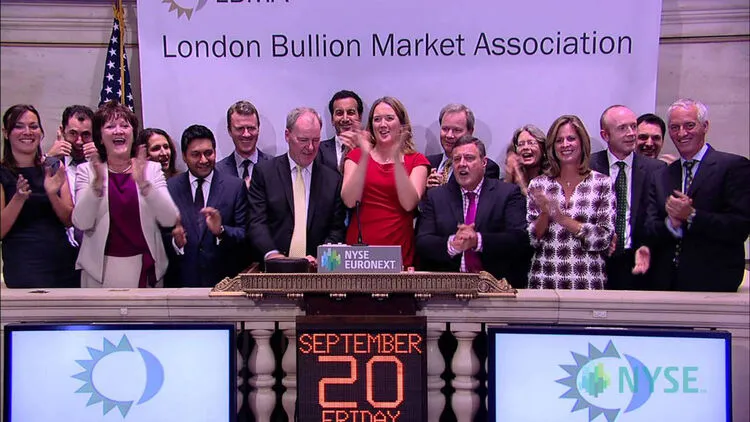
The London Bullion Market is the biggest wholesale market for gold and silver in the world, with a turnover of about 18 million ounces of gold and 108 million ounces of silver per day. Trading is done by the members of the London Bullion Market Association (LBMA): banks, mining companies, refiners, investors, etc. The LBMA has currently over 130 members from more 20 countries from around the world.
Early History
History of the London Bullion Market can be traced back to the 17th century cooperation between the East India Company and Moses Mocatta in shipping gold, and the gold rushes in the late 17th and 18th centuries. These played the key role in the foundation of the Bank of England and in the rise of London as one of the world’s leading bullion markets.
The London Gold Market and the Good Delivery
The London Gold Market was founded by five companies - Scotia-Mocatta (Mocatta & Goldsmid), N M Rothschild & Sons, Sharps Wilkins, Samuel Montagu & Co., and Pixley & Abell - in 1850. As the founding members of the Gold Market, these five companies took over the control and supervision as well as formed the first Gold Price fix in 1919. The London Gold Market also formulated the so-called Good Delivery, a set of rules in regard to the physical properties/quality of bullion bars that are traded on the London Bullion Market.
Due to high standards in terms of both size and purity, Good Delivery bullion bars are highly sought after throughout the world and are traded with on other markets as well including that in New York, Tokyo, Hong Kong and Zürich, to mention only a few. They are bought by both private and public sector financial institutions including central banks and governments as gold reserves.
The London Bullion Market Association (LBMA)
There were very little changes in the way the London Bullion Market is run and regulated since the foundation of the London Gold Market. It is still overseen and managed by the five founding members. Among the very few and the most important changes was the foundation of the London Bullion Market Association (LBMA) in 1987. It was formed on the insistence of the Bank of England which demanded the creation of an independent body to watch over the Good Delivery List.
London Metal Exchange
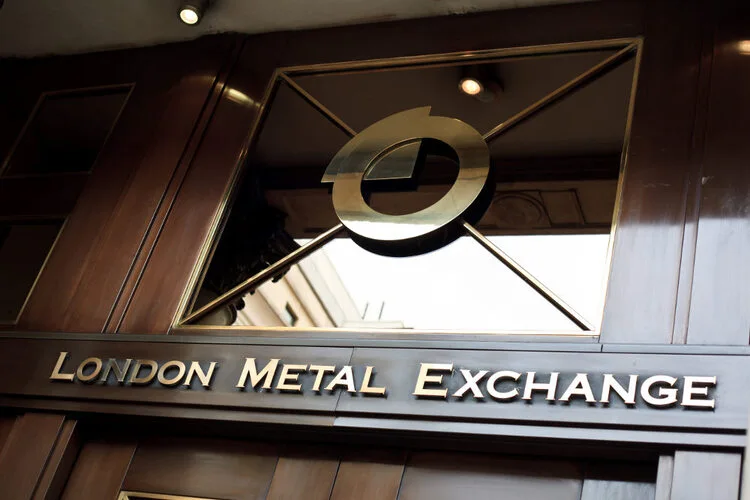
The London Metal Exchange (LME) is one of the largest exchange markets for industrial metals in the world; more than three quarters of non-ferrous metals are traded on the LME, with the total value of trade reaching $14.6 billion (in 2013). Owned by the Hong Kong Exchanges & Clearing Limited since the late 2012, the LME trades only with industrial metals. Precious metals such as gold and silver are traded on the London Bullion Market.
Early History
History of the LME dates back to the early 1570s when the Royal Exchange was founded. The commodities that were traded on the Royal Exchange also included metals. Initially, only physical metals were traded. And for the needs of domestic industry/market only. However, following Britain’s emergence as one of the leading metal exporters, domestic metal traders were soon joined by their colleagues from other parts of Europe.
By the 19th century, the Royal Exchange became so crowded by various traders, businessmen and financiers that it became extremely difficult to do business. Many groups thus moved out of the Royal Exchange and started trading at the nearby coffee houses. Metal traders chose the Jerusalem Coffee House in what is today the so-called Exchange Alley. And it was here where the Ring was “invented”. The seller who wanted to sell metals drew a circle on the floor and shouted “Change”. Those interested in buying would then bid standing around the circle.
Foundation and Rise of Modern LME
What is today known as the London Metal Exchange was founded in 1877 as the London Metals and Mining Company which was initially headquartered in Lombard Court. Due to the rapid growth of members, however, it soon moved to a newly constructed building in Whittington Avenue which served as its seat for almost 100 years. The LME was then briefly housed in a building in Fenchurch Street until finally moving to its current headquarters in Leadenhall Street in the mid-1990s.
In addition to adapting to changes in the metal market by moving/constructing suitable buildings, the LME also had to adapt to a number of other changes such as innovations in the information/telecommunication technology and in the actual metal trading, most notably the demand for new metals. Unlike copper and tin which have been traded with even before the LME was officially founded, zinc and lead were added only in the 1920s, while aluminium wasn’t traded on the LME until the late 1970s.
London Stock Exchange
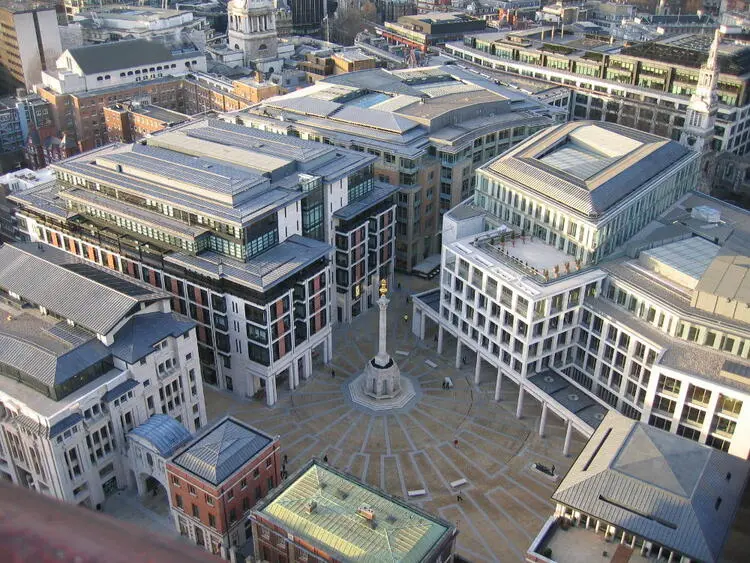
Headquartered in the City of London, the London Stock Exchange is one of the largest stock exchanges in the world. It is owned by the London Exchange Group plc which also owns the Borsa Italiana (since 1997), Italy’s principal stock exchange.
Foundation and Early History
Foundation of the Exchange is traditionally dated to 1801 when the so-called Subscription room was formed and became the first regulated exchange in the UK capital. In the same year, it got its first building at Capel Court featuring “The Stock Exchange” inscription on the entrance.
In the early years, there were no clear set of rules to regulate trading on the Exchange. This changed within about one decade when a set of regulations was adopted which would form the basis for the codified book of rules. Combined with the growing amount of trading, this made the Exchange an important “player” in London’s financial life and one of the key factors in the success in the war against Napoleonic France by helping the British government raise the needed funds. After Napoleon’s downfall and an unprecedented global economic growth, the London Stock Exchange established itself as one of the leading international financial institutions and by the mid-19th century, the Exchange building at Capel Court became too small. In 1854, the Exchange moved to a newly constructed building that was designed by architect Thomas Allason.
The Exchange During the War Period
The outbreak of the First World War was a major blow for the City’s financial institutions including the Stock Exchange. The war triggered various limitations and setbacks in trading and as a result, the number of Exchange members declined for nearly 1,000 by the end of the war. And it took a while for everything to return to normal after the end of the war. The outbreak of the Second World War caused a disturbance in trading as well but rather than limitations in trading like during the First World War, the disturbances were due to the German air raids on London.
From Post-War Period to Today
After a brief period of uncertainty and insecurity in the period immediately after the end of war, the Exchange experienced a tremendous growth and in the early 1970s, moved to the newly built Stock Exchange Tower. Unlike the earlier Exchange buildings, the Tower eventually became too large due to deregulation and computerisation in the 1980s and 1990s. In the early 2000s, the Exchange moved again, this time to a building at St Paul’s Cathedral in Paternoster Square where it remains to this day.